The right alternative depends on the job you need done, and Dreamdata’s job is measurement.
- You want the Google, LinkedIn and Meta ads built, watched and fixed, with or without Dreamdata beside it: Hero Marketer.
- You need attribution and want another tool to weigh against Dreamdata: HockeyStack. Otherwise stay on Dreamdata.
- You run a sales led ABM program and need intent data on target accounts: 6sense or Demandbase.
- You want display and retargeting aimed at target accounts: AdRoll ABM.
- You have a large paid media team that wants a vendor to run many channels: Metadata.io.
We make Hero Marketer, so it is first on this list. Dreamdata does not run ads, so most entries below do a different job from it. Every entry says where the tool fits and where it does not.
What Dreamdata does well
Dreamdata (opens in new tab) calls itself an agentic B2B attribution platform. It follows each account through the customer journey, so you can see what marketing adds to pipeline.
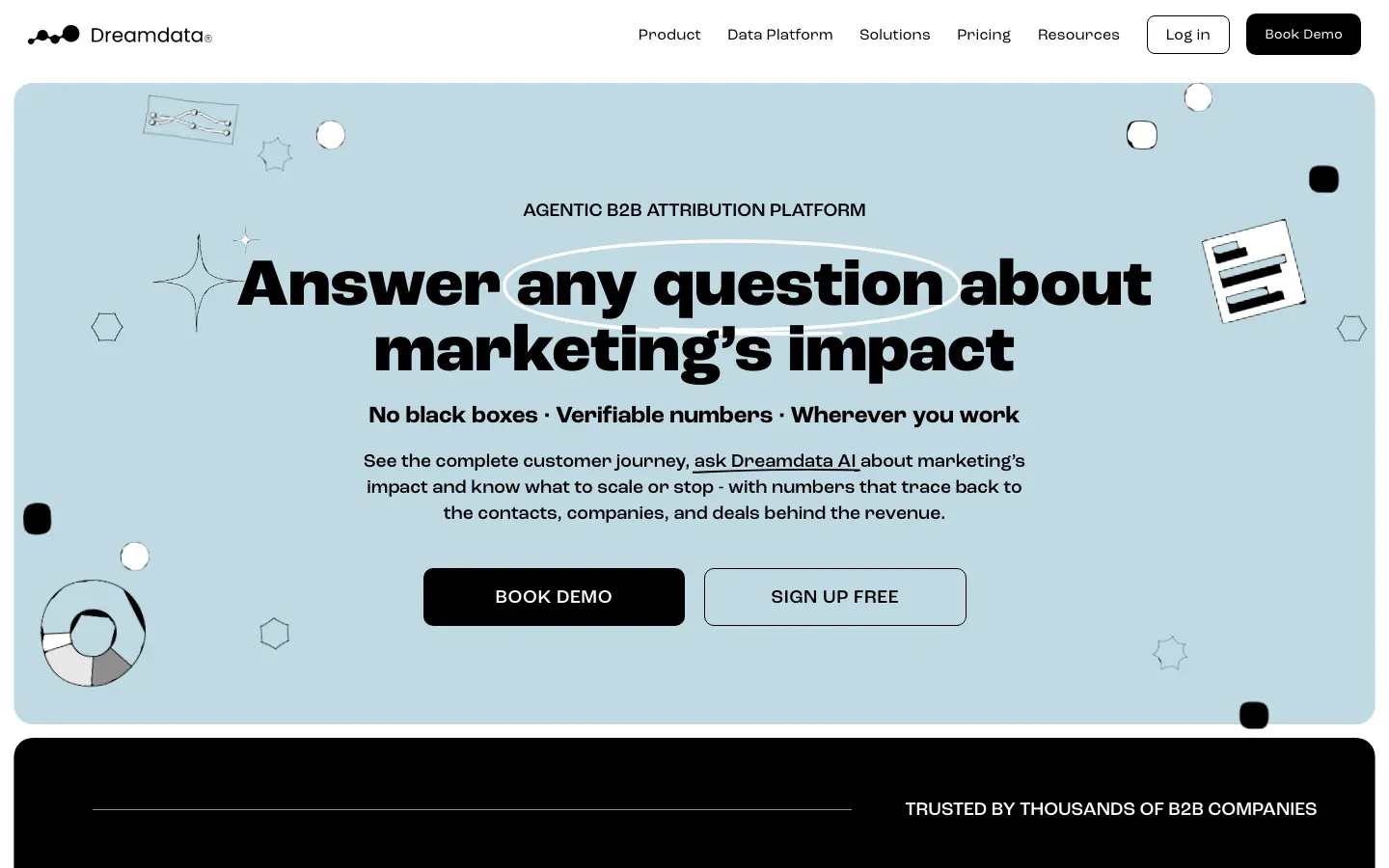
Its customer journeys page (opens in new tab) says it shows every touch in a B2B journey, as a timeline for each account. You can break a journey down by channel, campaign and source to see which activities moved an account forward. It collects data from a tracking script, from your ad platforms and from your CRM.
It also lists Dreamdata AI (opens in new tab): an analytics agent that answers questions in plain English, and an MCP server that connects Dreamdata to the AI tool your team already uses.
That is a clear offer for a team whose question is which channels and campaigns bring pipeline across long buying cycles. The rest of this post is for the team that also has ads to run.
Why teams look for a Dreamdata alternative
The reasons repeat, and most are about the job, not the quality.
The free plan has limits. Dreamdata’s pricing page (opens in new tab) shows a free plan with no card needed, limited to 2 months of user history, 5 seats and 1 sync. Past it, the Advanced plan has custom pricing on a demo, with activation and a data warehouse as add ons. A team that outgrows the free plan has to talk to someone to find the next price.
It measures. It does not run the ads. Its audience page (opens in new tab) says it syncs audiences to LinkedIn, Google, Meta and Microsoft Ads every day, and sends conversions to them. The pages do not describe building or running campaigns, so that work stays with you.
Knowing which ads work is not the same as fixing them. A measurement tool shows you which campaigns bring pipeline. Someone still has to write the ads, check the accounts and change the budget on Tuesday morning.
You need a different job done. Some teams searching for Dreamdata alternatives want intent data, account based display or a vendor that runs paid media for them. Those are different tools, and this list covers them too.
Dreamdata alternatives compared
| Tool | Best for | What it does | How you buy | Where it falls short for a small team |
|---|---|---|---|---|
| Hero Marketer | B2B SaaS teams that run their own ads | Builds campaigns, checks your accounts every morning and makes the changes you approve | Pay as you go: a day rate for each ad account it watches, plus AI work as you use it | Three platforms, and attribution through HubSpot only |
| HockeyStack | Attribution for B2B SaaS with about 100 people or more | GTM analytics and attribution | Custom plans on a demo, with startup pricing available | Measures the ads, does not run them, and its own guide points small teams away |
| 6sense | Sales led ABM with intent data | Intent data, sales intelligence and advertising that syncs audiences and runs its own demand side platform | Custom quote or demo | A broad platform sold as a custom package to sales and marketing together |
| Demandbase | Account based go to market teams | Finds in market accounts and buying groups, then advertises to them across channels | Custom plan after a form | Built around account lists and sales alignment, not one marketer running search and social |
| Metadata.io | Enterprise paid media teams | Builds and runs campaigns on twelve channels | Pricing scoped per team on a demo | No public price, and built for a larger team |
| AdRoll ABM | Display and retargeting for target accounts | Programmatic ads across display, native, video and connected TV | Self serve pay as you go for ads. Most ABM packages start with a demo | Does not build Google search, LinkedIn or Meta campaigns |
| Dreamdata | B2B attribution that starts on a free plan | Attribution across the customer journey | Free plan. Advanced plan on a demo | Measures the ads, does not run them |
1. Hero Marketer: best for B2B SaaS teams that need the ads run
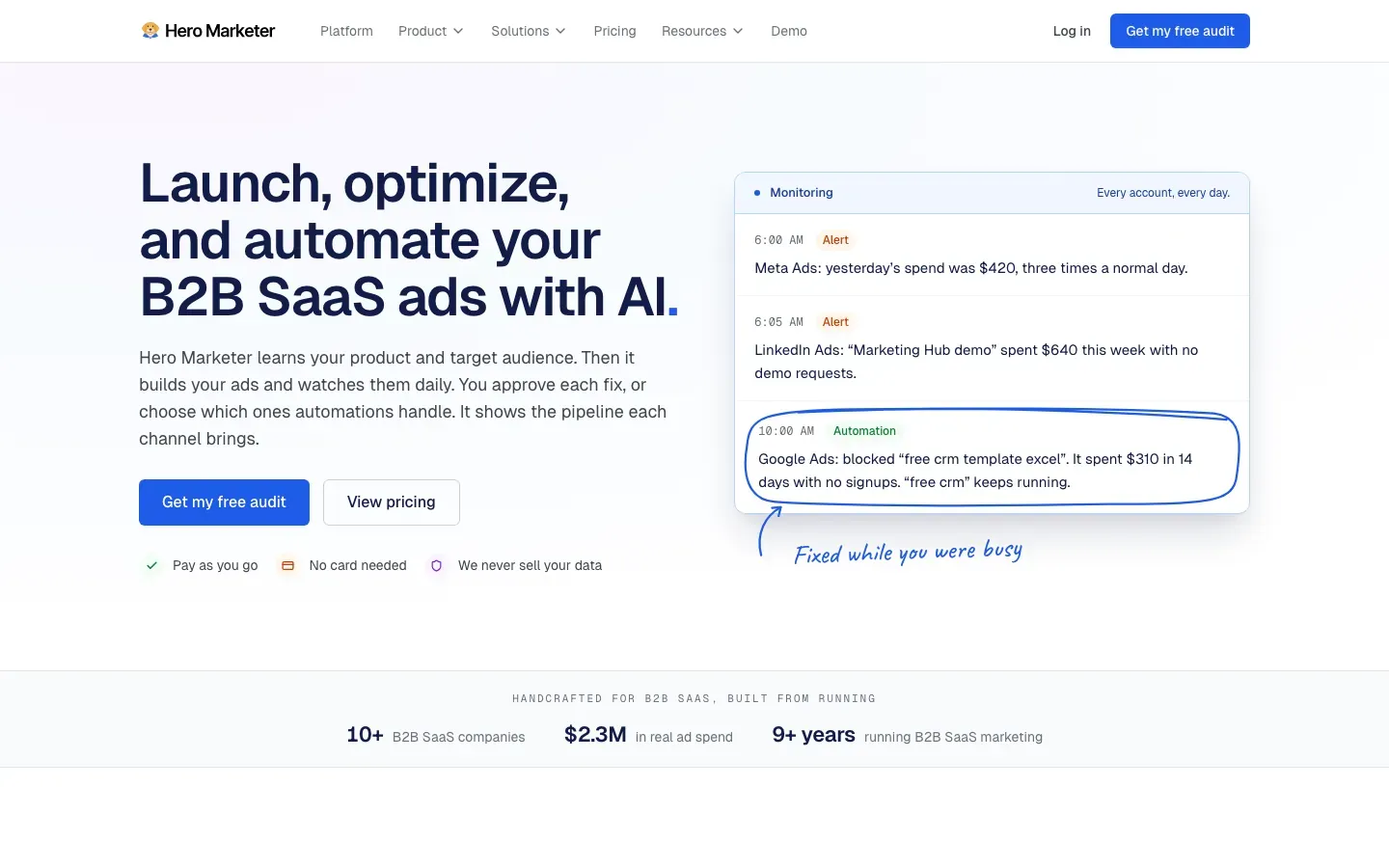
Hero Marketer is an AI agent for B2B SaaS ads on Google, LinkedIn and Meta. It learns about your product, then builds campaigns, ad copy and images from it. Every morning it checks your ad accounts, and it makes the changes you approve. With HubSpot connected, it shows which channels and campaigns bring SQLs, deals and customers.
Hero Marketer is not an attribution tool. How Dreamdata and Hero Marketer compare comes down to two jobs: Dreamdata measures pipeline, and Hero Marketer helps you run the ads that bring it. A team can use both. You connect an ad account, get a free audit with no card needed, and decide from there.
What it adds beside Dreamdata
The first addition is the build. The Google Ads campaign builder turns the product page you already have into a campaign you can launch. LinkedIn and Meta campaigns start the same way.
The second is the morning check. Every account is looked at each day, and you get an email when something needs you. Daily Google Ads monitoring means a campaign that spends with no leads is found within days, not at the end of the month.
The third is the change itself. When a report shows a campaign that is not working, the fix still has to be made in the ad account. With Hero Marketer, changes wait for your approval before they are made.
Pros
- It is built for B2B SaaS, so it judges ads on lead quality and long sales cycles.
- You make the calls: changes wait for your approval, unless you switch on a rule that allows them.
- You can start without a call. The dashboards are free and teammates join free.
- Your campaigns stay in your own ad accounts, and unused credits are refundable within 90 days.
Cons
- It covers three platforms: Google, LinkedIn and Meta. For Microsoft Bing, Reddit or TikTok, you need another tool.
- Its attribution is lighter than a dedicated tool’s, because it connects to one CRM: HubSpot.
Where Dreamdata is the better pick
- Credit across every touch. Dreamdata follows an account from first touch to last. With HubSpot, Hero Marketer shows the campaign behind a lead’s original source. It does not share credit across touches.
- A free start on measurement. Dreamdata has a free plan with limits. Hero Marketer gives you a free audit of each ad account, and credits pay for the work after that.
- Data beyond the ads. Dreamdata puts ad platform data and CRM data into one journey per account. Hero Marketer reads your ad accounts and, with HubSpot, your leads and deals.
How you pay
Hero Marketer charges $0.25 a day for each ad account it watches, plus AI work as you use it. See the pay as you go pricing for what a typical job costs.
2. HockeyStack: best for attribution beside or instead of Dreamdata
HockeyStack (opens in new tab) is the nearest match to Dreamdata: a GTM analytics and attribution platform. It works with Salesforce, HubSpot and Microsoft Dynamics, so check that your CRM is on that list.
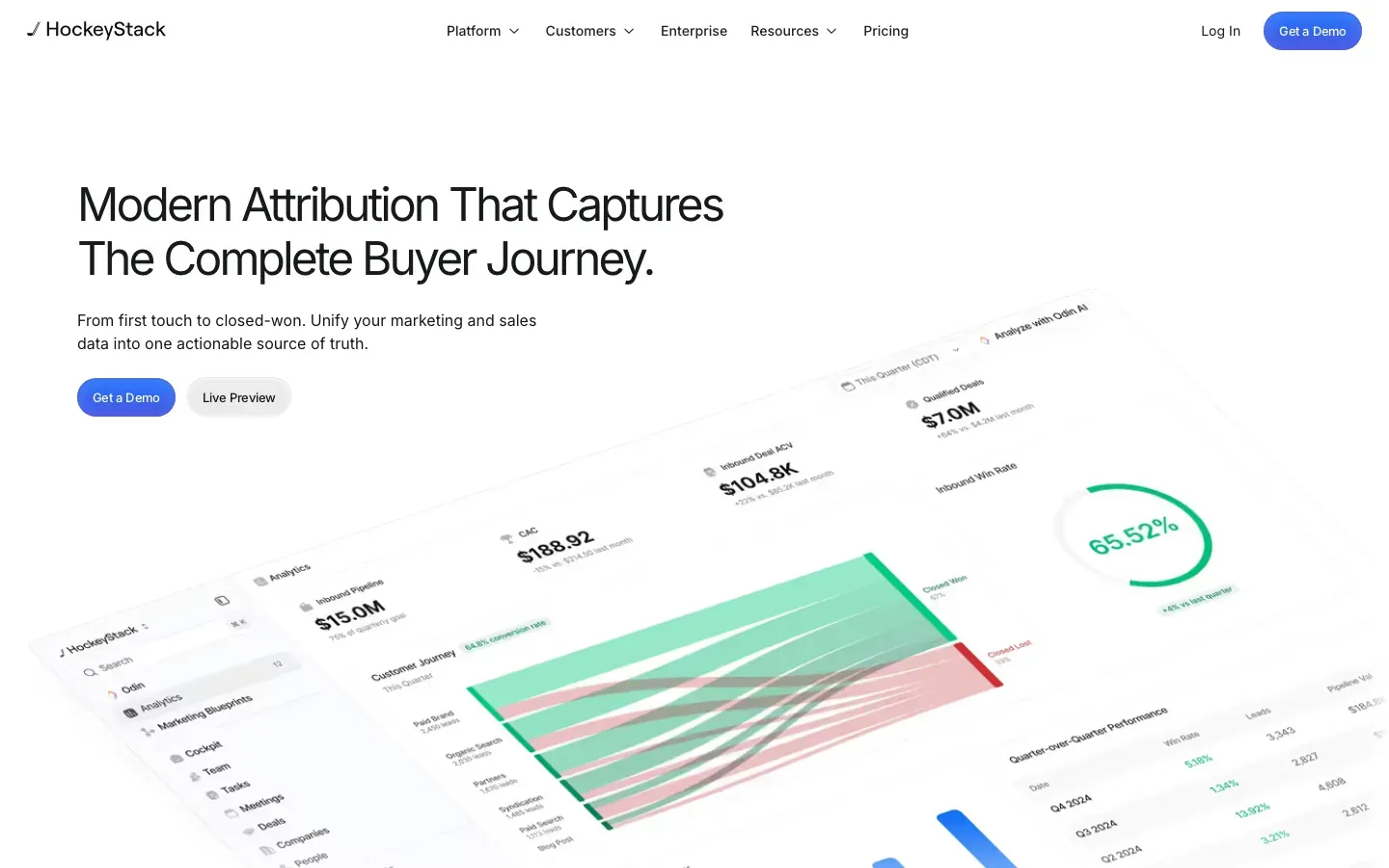
Where it matches Dreamdata: it does the same job. If your question is which channel earns credit for pipeline, either tool is built around it, and the choice comes down to size and how you buy.
Where it differs for a small team: its own guide to its fit (opens in new tab) lists B2B SaaS companies with 100 or more employees as the primary customer. It treats 30 to 100 people as a secondary fit and advises against fewer than 30. Dreamdata starts on a free plan, which is an easier first step for a team that size. Like Dreamdata, it measures ads and does not build or run them.
Its pricing page (opens in new tab) offers custom plans on a demo, and says startup pricing is available. See HockeyStack compared with Hero Marketer.
3. 6sense: best for sales led ABM programs that need intent data
6sense (opens in new tab) calls itself a partner for agentic go to market, and its pitch goes beyond measuring. It sells intent data on who is researching, company and contact data, and sales intelligence that ranks accounts and suggests next actions. For ads, it builds audiences from buying stage intent, syncs them to Google, LinkedIn and Meta, and runs its own demand side platform.
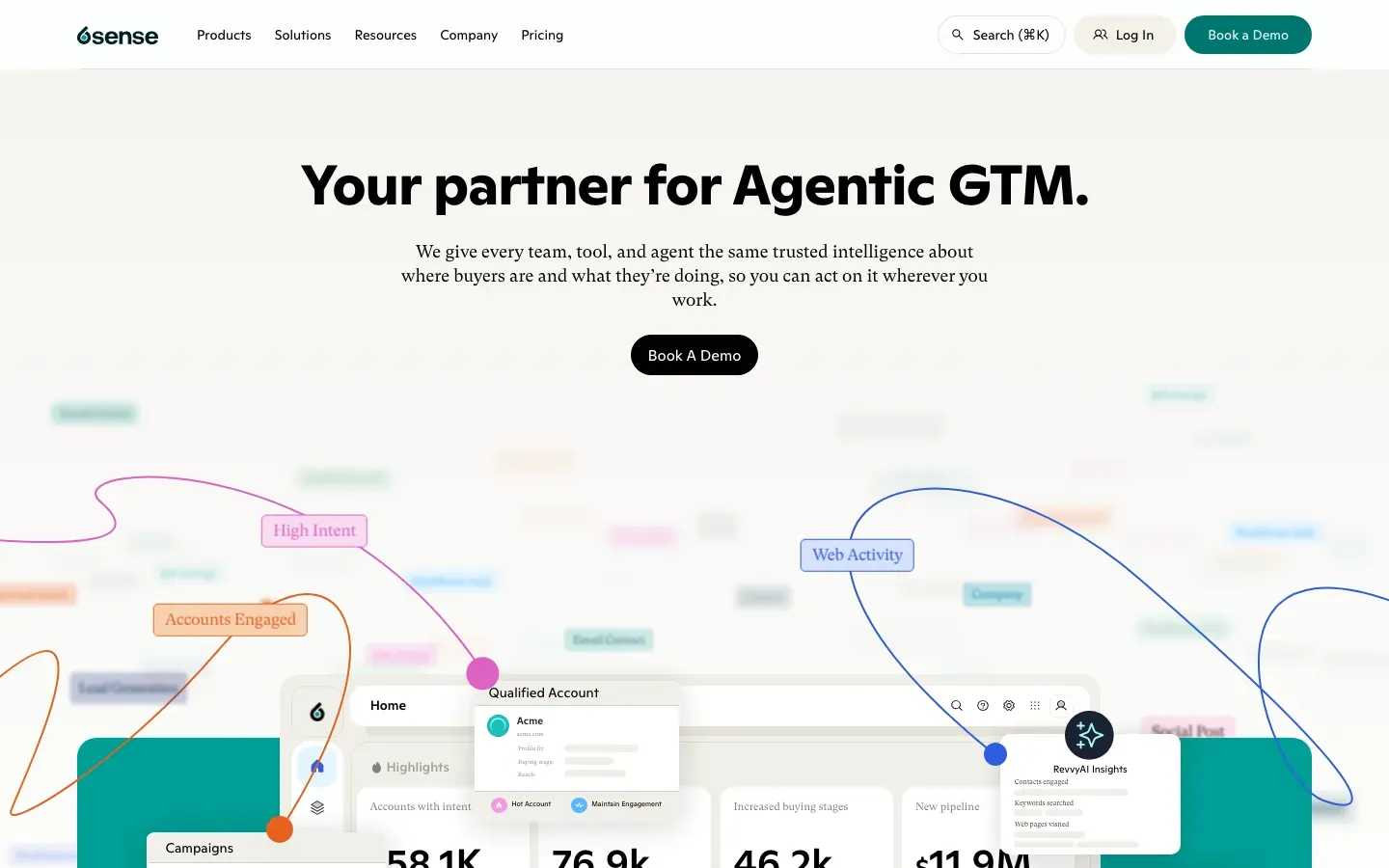
Where it differs from Dreamdata: it starts from the account and its buying stage, and it serves sellers as well as marketers. Dreamdata reads the touches your accounts have already had with you. If sales and marketing must work from the same intent signals, 6sense is the closer fit.
Where it falls short for a small team: next to Dreamdata’s narrow job, 6sense is a wide platform, and most of what you pay for sits outside the ads you run. A first marketer who wants to launch and fix campaigns this week will touch only a small part of it.
Dreamdata offers a free plan to start on. 6sense’s pricing page (opens in new tab) lists no price and no free tier: it describes flexible pricing based on where you are in your go to market journey, offers a quote, and leads to a demo. See 6sense compared with Hero Marketer.
4. Demandbase: best for account based go to market teams
Demandbase (opens in new tab) calls itself an ABM platform for B2B sales and marketing, so it starts from the target account, not from the journey. It identifies in market accounts, ranks buying groups, and runs targeted advertising to those accounts across channels.
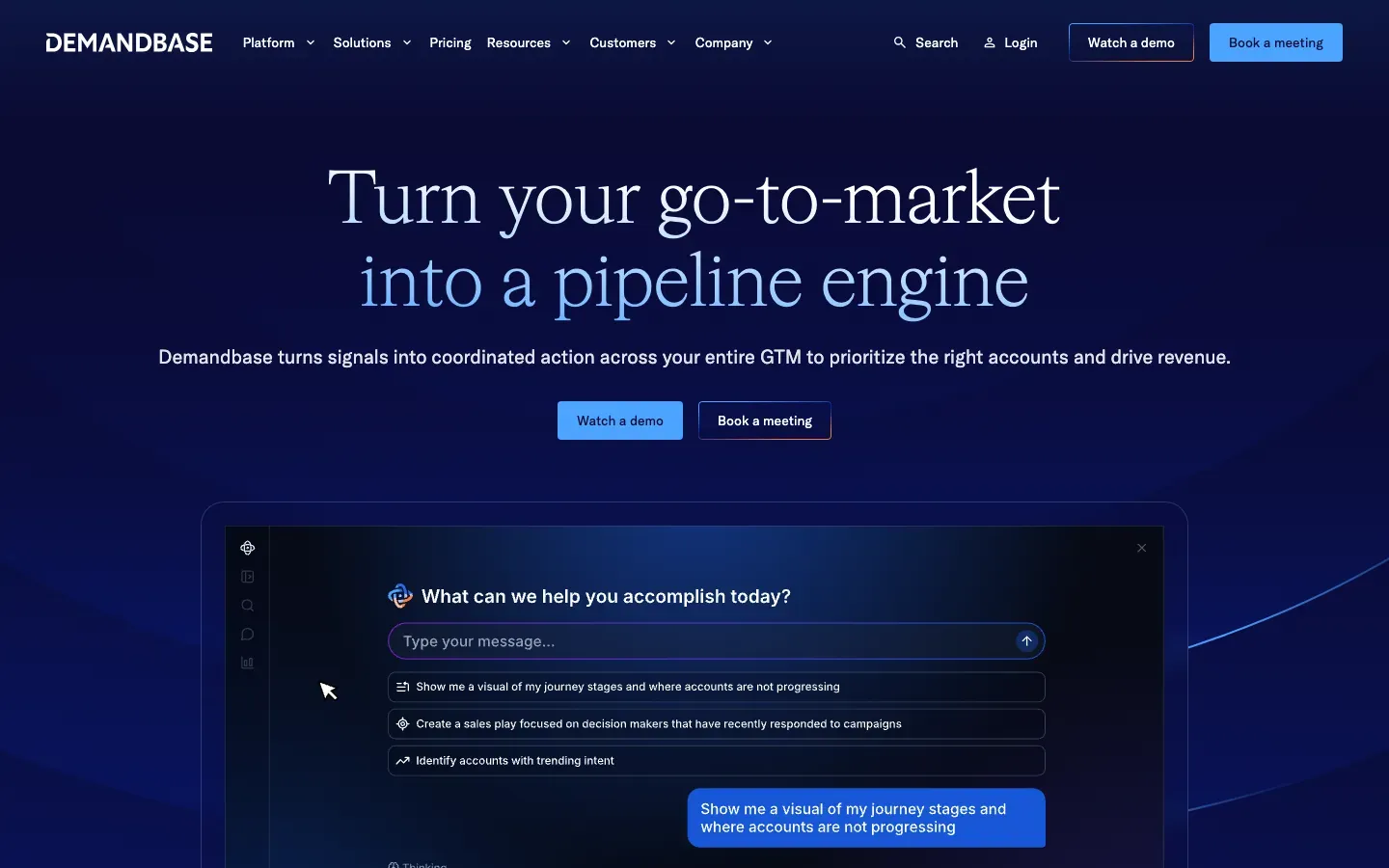
Where it differs from Dreamdata: Dreamdata shows what happened across your journeys. Demandbase ties advertising to account lists and to the sales team’s work on the same accounts. If your program runs on named accounts, that is its home ground.
Where it falls short for a small team: it expects a go to market team with account lists, sales alignment and a person to run the platform. A marketer who handles search and social in their own ad accounts will leave most of it idle.
Where Dreamdata has a free plan, Demandbase’s pricing page (opens in new tab) lists no prices: you fill out a form, and it builds a custom plan. See Demandbase compared with Hero Marketer.
5. Metadata.io: best for enterprise paid media teams
Metadata.io (opens in new tab) does the campaign work Dreamdata’s pages do not describe. Its homepage says you can build and run B2B campaigns in one product: audiences, landing pages and ads, then running and optimizing them from one place, with your team setting goals, budgets and approvals.
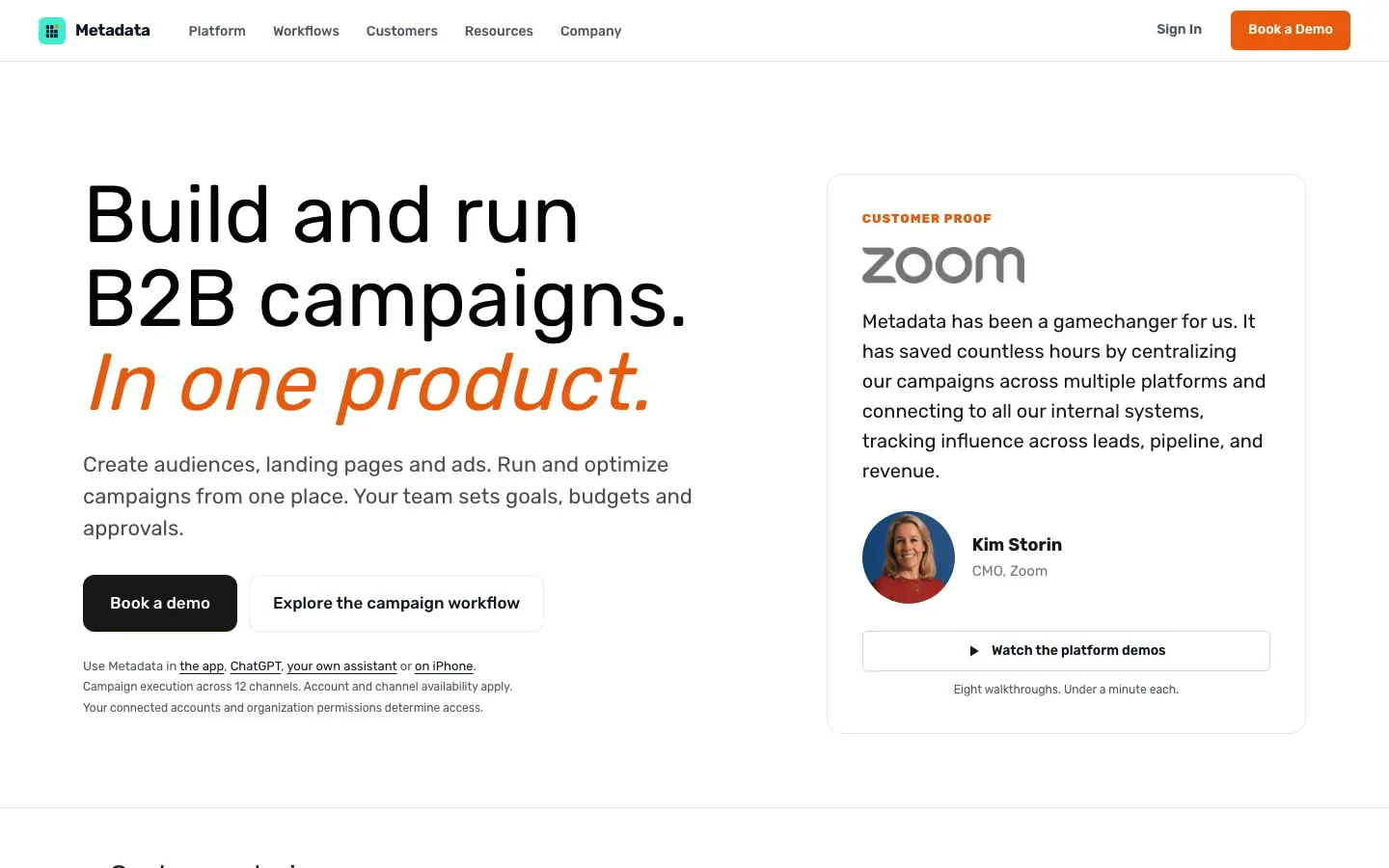
Where it differs from Dreamdata: it runs the campaigns, and it also reports on them. Its platform page (opens in new tab) lists twelve channels, and it shows channel performance beside CRM outcomes. Its services page (opens in new tab) says its own team is optional.
Where it falls short for a small team: Dreamdata lets you start on a free plan, while Metadata.io has no public price. Its pricing page (opens in new tab) says pricing is scoped per team on a demo.
Its company page (opens in new tab) says it is built for enterprise B2B demand and revenue teams, which matters if you are one marketer. See Metadata.io compared with Hero Marketer.
6. AdRoll ABM (formerly RollWorks): best for display and retargeting aimed at target accounts
AdRoll (opens in new tab) sells AdRoll ABM, the product formerly called RollWorks, to B2B revenue and marketing teams. It lists display, native, video, connected TV, mobile, social and out of home among its channels, so it is where you buy reach after you know which accounts to aim at.
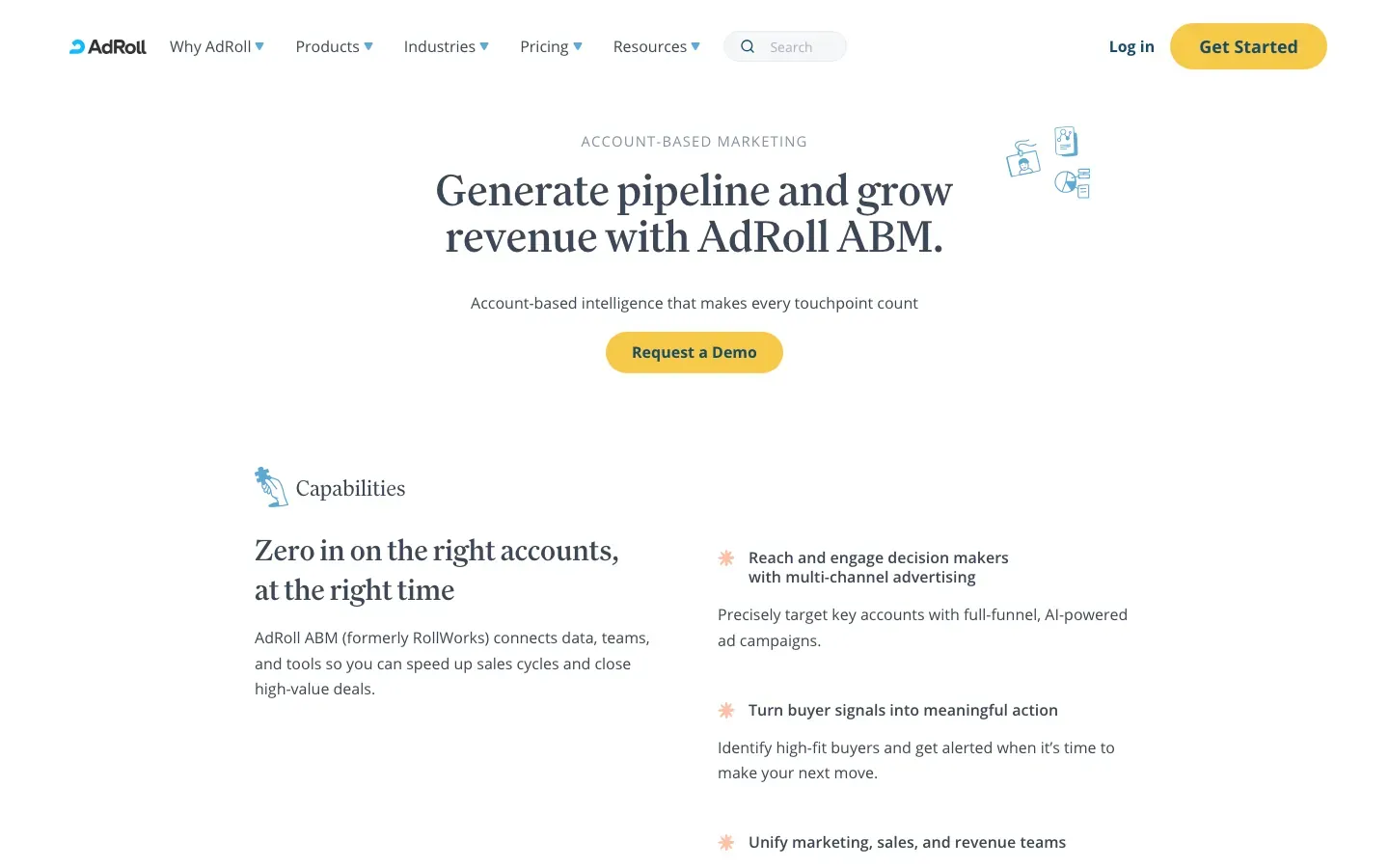
Where it differs from Dreamdata: it is a place to buy the media, not to measure it. AdRoll’s ads plan is self serve, and its pricing page says there is no minimum spend. Its Account Based Retargeting package has no fee to start, and you pay only for media.
Where it falls short for a small team: it buys programmatic reach and retargets accounts. It does not build or fix your Google search, LinkedIn or Meta campaigns, and Dreamdata’s pages do not describe that work either, so the weekly upkeep stays with you.
Media is priced per thousand impressions on its pricing page (opens in new tab), so cost varies with demand. Most ABM packages start with a demo request, and the managed Advanced package needs a one year commitment. See AdRoll ABM compared with Hero Marketer.
How to choose
Start from the job, then check the team.
- You run Google, LinkedIn and Meta ads yourself and own the number. Hero Marketer. An AI agent for B2B SaaS ads management fits the person who decides and wants help with the work. It does not fit anyone who wants a service to do it for them.
- Your question is which channel brings pipeline. Stay on Dreamdata, or weigh HockeyStack if you are about 100 people or more with a CRM it supports.
- Your sales team and marketing team need the same intent data. 6sense or Demandbase. Plan for a demo and a custom package.
- You want display or connected TV aimed at a list of accounts. AdRoll ABM.
- You want a vendor to run many channels and the budget fits a scoped contract. Metadata.io.
- You need both measurement and ad running. Pair Dreamdata with an agent that helps you run the ads. They do different jobs.
When to stay on Dreamdata
Stay if your main question is which channels and campaigns bring pipeline, and its journey view already answers it. Stay if the free plan covers your limits, or if you need credit shared across every touch. Adding a tool for the ads does not mean leaving Dreamdata. Before you change how your data flows, read your Dreamdata plan.
FAQ
What are the best Dreamdata alternatives?
It depends on the job. If you want attribution, the closest one is HockeyStack, and many teams stay on Dreamdata. For the Google, LinkedIn and Meta ads themselves, Hero Marketer, which can run beside Dreamdata. For intent data and sales led ABM, 6sense or Demandbase. For display and retargeting to target accounts, AdRoll ABM. For many channels run by a vendor, Metadata.io.
Does Dreamdata have a free plan?
Yes. Its pricing page shows a free plan with no card needed. It is limited to 2 months of user history, 5 seats, 3 stage models, 2 notifications and 1 sync. Past that, the Advanced plan has custom pricing: you request a demo to get a quote, and a guided free trial is available. Activation and a data warehouse are add ons.
Does Dreamdata run my ads?
Its pages do not describe building or running campaigns. They describe syncing audiences to LinkedIn, Google, Meta and Microsoft Ads each day, and sending conversions to those platforms. The campaigns themselves are still built and fixed in each ad platform, or in a tool that does that job.
Dreamdata vs HockeyStack: which fits?
Both measure B2B pipeline, so the choice is about size and how you buy. Dreamdata starts on a free plan with limits. HockeyStack sells custom plans on a demo and says startup pricing is available. Its own guide lists B2B SaaS companies with 100 or more employees as its primary customer and advises against fewer than 30 people. Neither one builds or runs your ads.
Can I use Dreamdata and Hero Marketer together?
Yes. Dreamdata measures which channels and campaigns bring pipeline. Hero Marketer builds, watches and fixes the ads in your Google, LinkedIn and Meta accounts, and makes the changes you approve. You can connect one ad account and get the free audit while you decide.